

A key that suddenly becomes difficult to turn is usually telling you something.
Sometimes the problem is minor. In other cases, it can be the first warning sign of a worn cylinder, door-alignment issue or failing multipoint mechanism.
The most important thing is simple:
do not keep forcing the key.
A stiff lock can turn into a snapped key, damaged cylinder or complete lockout very quickly.
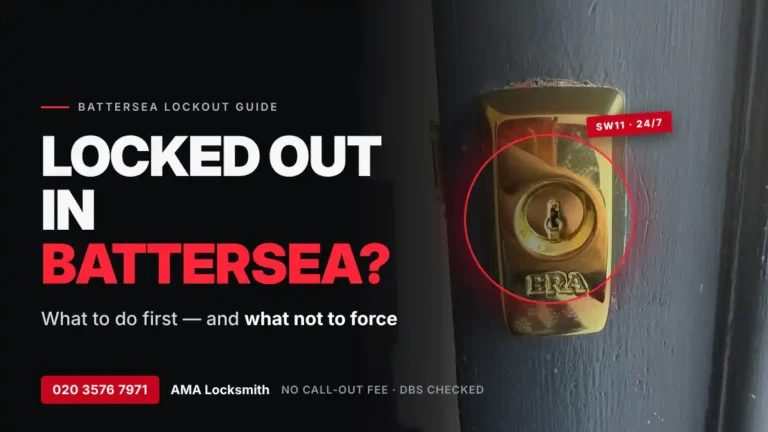
If the lock has already failed and you cannot get inside, our guide on what to do when you’re locked out in Battersea explains the safest next steps.
Start With One Simple Check
If it is safe and practical to test the door while it is open, compare how the lock behaves with the door open and closed.
If the key turns normally with the door open but becomes stiff when the door is closed, the problem may involve alignment rather than the lock itself.
If the key is still difficult to turn with the door open, the fault is more likely to involve the key, cylinder or internal lock mechanism.
This is only a useful clue.
It does not replace a proper inspection.
Common Reasons a Key Will Not Turn
A stiff or jammed lock can be caused by several different problems.
Common causes include:
- a worn key
- a bent key
- a damaged cylinder
- internal lock wear
- dirt or contamination inside the cylinder
- a misaligned door
- pressure on the latch or bolt
- a failing gearbox
- a multipoint mechanism problem
- a poor-quality duplicate key
- the wrong key being used
The important point is that not every stiff lock needs replacing.
The cause should be identified first.
Check the Key Before Blaming the Lock
Look closely at the key.
If it is visibly bent, twisted, cracked or badly worn, stop forcing it.
A damaged key may still work for a while before suddenly becoming unreliable.
If you have a properly cut spare key, trying it carefully can help establish whether the problem is the key or the lock.
If the spare works normally, the original key may be the issue.
If both keys behave the same way, the lock or door is more likely to be responsible.
Does the Door Need Lifting or Pushing?
This is one of the strongest signs that alignment may be contributing to the problem.
If you have to:
- lift the handle harder than normal
- push the door firmly into the frame
- pull the door towards you
- hold the door in a particular position
before the key will turn, the locking points may not be lining up properly.
That does not automatically mean the cylinder is faulty.
The door itself may have moved slightly.
Why Doors Become Misaligned
Doors move over time.
Possible causes include:
- hinge wear
- repeated heavy use
- frame movement
- temperature changes
- loose hardware
- door weight
- previous adjustment
- wear in the locking mechanism
Even a small amount of movement can place pressure on the latch, bolt or multipoint locking points.
That pressure can then make the key feel stiff.
uPVC and Composite Doors
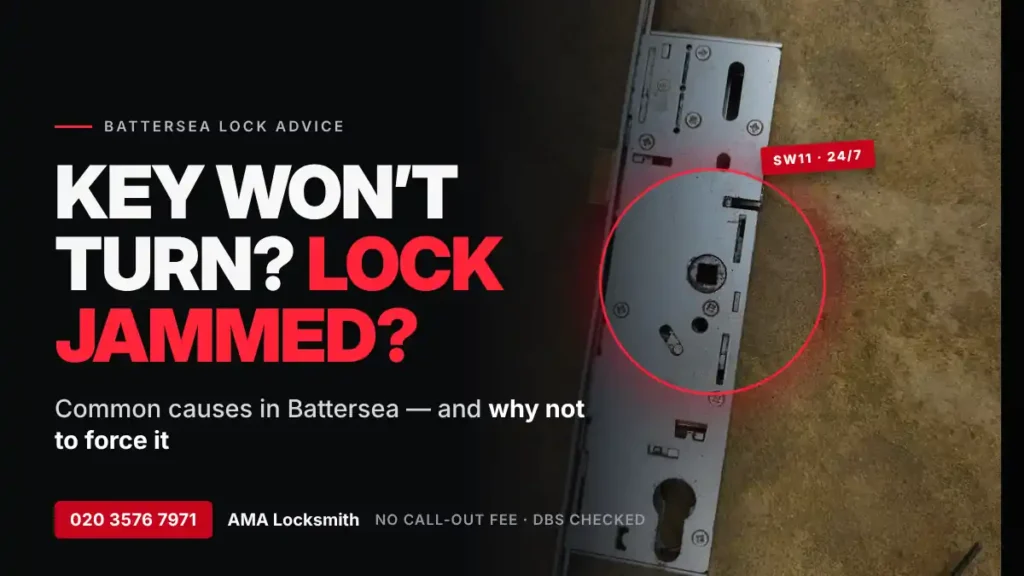
uPVC and composite doors often use multipoint locking systems.
When the handle is lifted, several locking points move into position along the edge of the door.
The key then secures the mechanism.
If one part of that system is not working correctly, you may notice:
- a stiff handle
- a key that will not turn
- a key that only turns part way
- a door that locks only when lifted
- a handle that moves but does not engage the lock
- a key that turns while the door remains locked
The fault could involve:
- the cylinder
- the gearbox
- the handles
- the spindle
- the multipoint strip
- door alignment
This is why replacing the cylinder alone does not solve every uPVC or composite-door fault.
Our main Battersea locksmith service covers multipoint and uPVC lock problems across SW11, including Battersea Park, Battersea Power Station and Clapham Junction.
What Is a Failed Gearbox?
The gearbox is a key part of many multipoint locking systems.
It connects the movement of the handle and key to the rest of the mechanism.
When it begins to fail, you may notice:
- the handle becoming unusually stiff
- the lock making clicking or grinding noises
- partial movement
- the key no longer completing the locking action
- the handle moving but the locking points not responding properly
If the gearbox fails completely, the door can become stuck locked or stuck unlocked.
That is why a lock that is gradually becoming harder to use should not be ignored.
Timber Doors and Mortice Locks
Older Battersea properties often use timber entrance doors.
These may be fitted with:
- mortice deadlocks
- mortice sashlocks
- night latches
- combinations of different lock types
A stiff key on a timber door can be caused by:
- wear inside the lock
- a worn key
- loose lock components
- pressure from the strike plate
- movement in the door or frame
- a damaged cylinder on a night-latch setup
If the lock only works properly when you push or pull the door, alignment should be considered alongside the lock itself.
Battersea’s Different Property Types Matter
The same fault can behave differently depending on the property.
A Victorian or Edwardian house near Battersea Park may have a traditional timber entrance door with a mortice lock.
A converted flat may combine older door hardware with newer cylinders or replacement locks.
A modern apartment near Battersea Power Station may use a completely different entrance system.
That is why proper diagnosis matters more than simply replacing the visible lock.
Our emergency locksmith Battersea page explains the different door and lock types found across Battersea and SW11 in more detail.
The Key Goes In but Will Not Rotate
If the key inserts normally but will not turn, possible causes include:
- key wear
- cylinder damage
- internal contamination
- pressure from the door
- internal lock failure
- an incorrect or poorly cut key
If you have a known-good spare key, try it carefully.
Do not apply extra force if it behaves the same way.
That is unlikely to solve the underlying problem.
The Key Only Turns Part Way
A key that begins to rotate but stops part way can indicate:
- internal wear
- pressure on the bolt
- cylinder damage
- misalignment
- partial mechanism failure
Repeatedly working the key backwards and forwards can make things worse.
If the door is open, compare the lock operation with the door open and closed.
That can help narrow down whether the problem is inside the lock or related to the door position.
The Key Turns but Nothing Happens
This usually suggests the problem is beyond the key itself.
Possible causes include:
- failed cylinder cam
- disconnected mechanism
- failed gearbox
- latch or bolt not retracting
- multipoint system failure
In this situation, the lock may feel as though it is turning normally even though the door remains secured.
That normally needs a closer mechanical assessment.
What If the Handle Is Also Stiff?
A stiff handle together with a stiff key is another useful clue.
On a multipoint door, the handle operates several locking points.
If the handle becomes harder to lift or push down, the mechanism may be under strain.
Possible causes include:
- poor alignment
- gearbox wear
- locking points catching
- internal mechanism damage
Do not keep forcing the handle.
If the mechanism fails completely while the door is closed, the job can become more complicated.
Can Lubricant Fix a Stiff Lock?
Sometimes lubrication can help.
But the correct product matters.
Avoid pouring ordinary household oil into a cylinder.
Greasy products can attract dirt and cause further problems over time.
A suitable dry lock lubricant is generally a better choice for many cylinder locks.
However, if lubrication only improves the lock temporarily, the underlying fault is still there.
Lubrication will not fix:
- bad alignment
- a failing gearbox
- damaged internal components
- severe cylinder wear
Why Forcing the Key Is a Bad Idea
The key is often the weakest part of the system.
If you keep increasing pressure, something eventually gives.
That may be:
- the key
- the cylinder
- the lock body
- the gearbox
A snapped key adds an extraction problem to the original fault.
A damaged mechanism may also leave the door impossible to secure.
If the amount of force required feels abnormal, stop.
Warning Signs Before a Lock Fails Completely
Many locks give warning before they fail.
Common signs include:
- the key gradually becoming stiffer
- the handle requiring more force
- the door starting to catch the frame
- the lock working only after several attempts
- scraping or grinding
- the key becoming difficult to remove
- the lock behaving differently in hot or cold weather
- the door only locking when lifted
These signs are worth dealing with before the door stops working altogether.
Lock Repair or Replacement?
A stiff or jammed lock does not automatically need replacing.
Repair may be suitable where:
- the lock is still serviceable
- the fault is limited
- alignment can be corrected
- replacement parts are available
- the existing lock remains suitable for the door
Replacement may make more sense where:
- the lock is badly worn
- the cylinder is damaged
- the mechanism has repeatedly failed
- replacement parts are unavailable
- repair would not be reliable
- the existing security is poor
The right decision should follow diagnosis rather than guesswork.
When to Call a Locksmith
You should consider professional help if:
- the key will not turn at all
- the key feels close to snapping
- the door will not secure
- the handle has become very stiff
- the key turns but the door remains locked
- the mechanism no longer engages
- the problem keeps returning
- you are already locked out
If the lock has already failed completely, see our locked-out Battersea guide before trying to force the door.
Preventing a Full Lockout
If a lock is gradually getting worse, dealing with it early can reduce the chance of being locked out later.
Pay attention to changes in how the door behaves.
If you suddenly need to:
- lift the handle harder
- push the door into the frame
- turn the key several times
- jiggle the key before it works
something has changed.
That does not always mean an expensive repair.
But it does mean the problem should not be ignored.
Key Won’t Turn in Battersea?
AMA Locksmith provides lock repair and emergency locksmith assistance across Battersea and SW11.
If the key has become stiff, the handle is difficult to operate or the lock has stopped working properly, avoid forcing it.
For urgent help, visit our Battersea emergency locksmith page or call directly.
Call 020 3576 7971
Call or WhatsApp 07752 270463
24/7 Emergency Service · No Call-Out Fee · Fully Insured · DBS Checked · Speak Directly to the Locksmith